

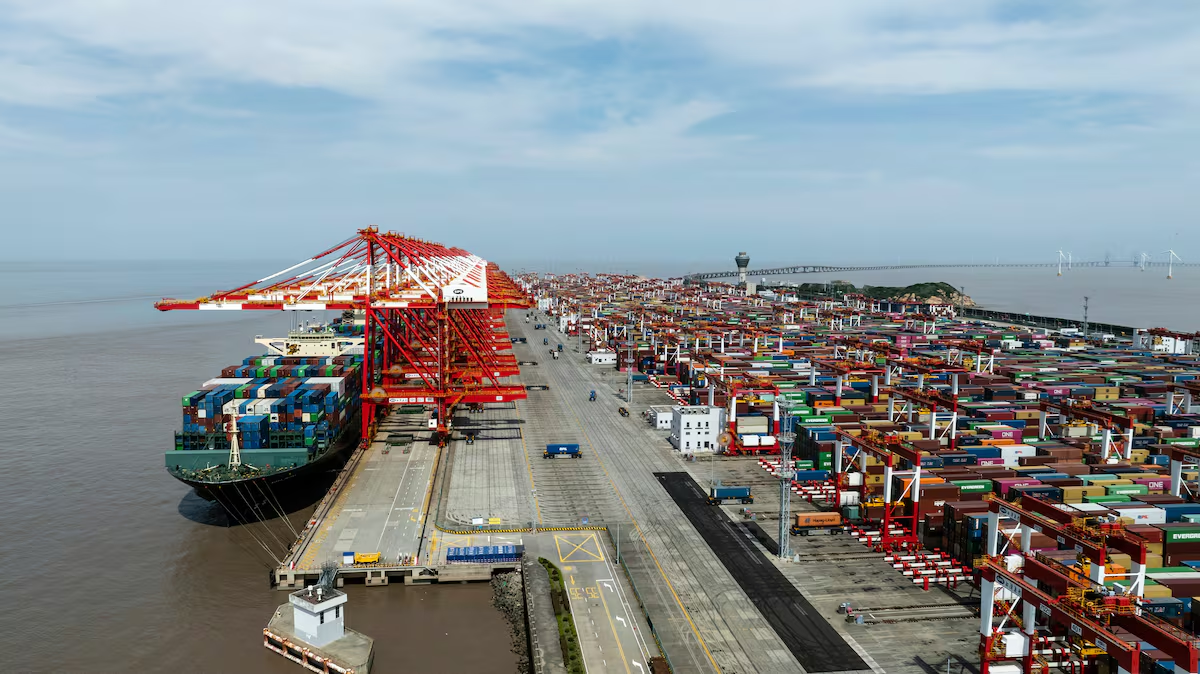
Mexico China tariffs officially came into force at midnight on January 1, marking a decisive shift in the country’s trade policy. The new measures raise import duties on 1,463 tariff lines from countries with which Mexico does not have a trade agreement. Affected nations include China, Russia, South Korea, India, Vietnam, Thailand, and Brazil. Although lawmakers approved lower rates than initially proposed by the executive, the policy still impacts more than 1,000 products across multiple industries.
The tariff rates now range from 5 per cent to as high as 50 per cent. Products subject to the increase include electric vehicles, auto parts, cosmetics, plastics, steel, textiles, footwear, toys, furniture, appliances, glass, and soaps. According to the federal government, the changes will generate about 30 billion pesos in annual revenue. The Ministry of Finance estimates the inflationary impact at just 0.2 per cent, while basic food basket products from the affected countries will remain tariff-free throughout 2026.
Why Mexico China tariffs mark a turning point
Experts describe the policy as a major break from Mexico’s long-standing approach to trade liberalisation. For decades, Mexico pursued open markets and low tariffs to attract investment and boost exports. With the new measures, the government aims to rebalance trade and reduce dependence on imports.
The official decree allows the Ministry of Economy to introduce mechanisms that guarantee input supply under competitive conditions. However, analysts warn that higher duties on more than 1,000 imports will challenge Mexican importers and strain trade relationships. China stands at the centre of this shift, as it remains Mexico’s second-largest trading partner after the United States.
Trade imbalance with China drives policy shift
Mexico imports more than $129 billion worth of goods from China each year, while exports to the Asian giant total about $9 billion. This gap leaves Mexico with a trade deficit of roughly $120 billion, which continues to widen annually. High production capacity, low prices, and limited regional supply help explain the imbalance.
The timing also matters geopolitically. With the trade war between Washington and Beijing ongoing, Mexico’s tariff increase signals closer alignment with U.S. protectionist policies. The move comes just months before the USMCA renegotiation begins in July, reinforcing Mexico’s push for deeper North American integration.
Read Also
Los Bailadores de Bronce highlight Latin culture
Sazón de Brookline brings tradition to the table
Government defends Mexico China tariffs
The Claudia Sheinbaum administration insists the policy does not target any specific country. Officials say the goal is to protect Mexican companies and safeguard about 350,000 local jobs. The Ministry of Economy argues the tariffs align with Plan Mexico, the government’s six-year investment strategy focused on reindustrialisation.
Under this import substitution plan, Mexico aims for domestic firms to supply 50 per cent of local consumption. Authorities say the approach will correct trade distortions, strengthen strategic sectors, and reduce reliance on foreign goods.
Domestic and international reactions
Despite strong defence from the National Palace, the new tariff wall has raised concerns at home and abroad. China quickly criticised the measure and urged Mexico to reverse it, while launching its own investigation into possible retaliation. Exporters from South Korea and India have also voiced concern over higher barriers.
Within Mexico, business reactions remain mixed. Some companies fear higher costs and disrupted supply chains. Others support the strategy, viewing it as a chance to revive domestic manufacturing and reduce import dependence.
Experts warn of strategic gaps
Ignacio Martínez Cortés of UNAM says the shift reflects broader geopolitical changes driven by U.S. policy under Donald Trump’s second term. He notes that Mexico’s 40-year period of unilateral trade liberalisation effectively ended on January 1 with the amendment to the General Import and Export Tax Law.
However, he warns Mexico lacks a clear national export policy or long-term trade security strategy. Without one, the country risks reacting to external pressure rather than advancing a coherent national interest across trade, security, and economic development.
What comes next for Mexico China tariffs
From January onward, companies will begin to feel the real impact. Some will benefit from reduced competition, while others will face higher costs or need to change suppliers. The policy could reshape production chains across Mexico.
At stake is more than tariffs alone. The future of the USMCA also hangs in the balance, as the agreement covers over 80 per cent of Mexican exports and generates more than $500 billion in annual trade. As Mexico adjusts to its new tariff regime, the outcome will test whether the country can protect domestic industry without undermining its role in global trade.


